The Trouble with Being Noble
One Hungarian grape, two very different wines, and a dinner-table discovery that began with a rather expensive dessert.
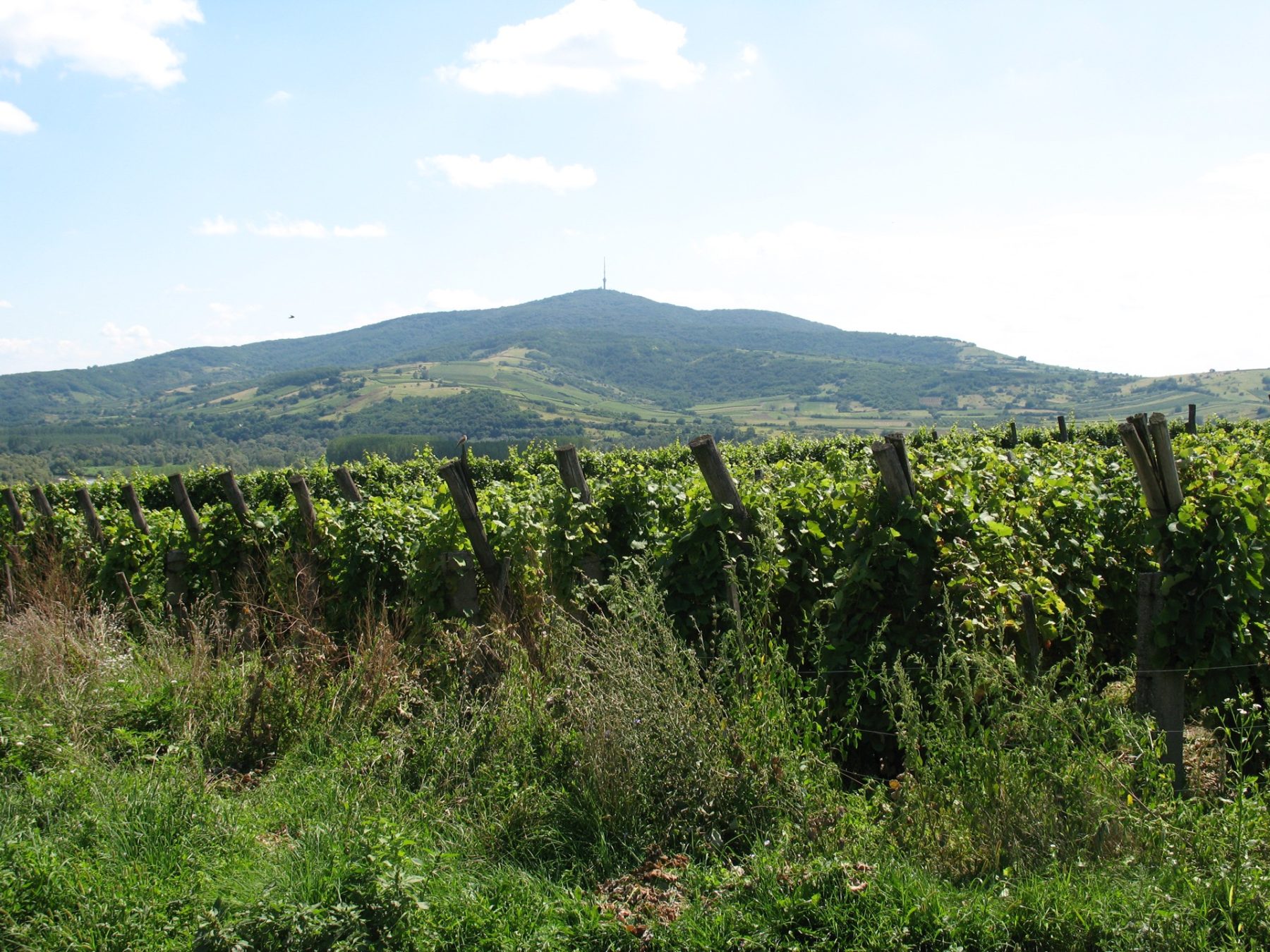
Tokaj Hill seen across the vineyards from Bodrogkeresztúr. Photo: JezW, CC BY-SA 3.0, via Wikimedia Commons.
My friends were studying the dessert menu.
There were the usual temptations, all hovering somewhere between £15 and £20. Chocolate, something involving cream, probably a fruit tart. Perfectly respectable choices.
I ordered a glass of Tokaji Aszú 5 Puttonyos from Oremus.
It cost rather more.
In fact, at close to £300, it was considerably more expensive than everyone else’s desserts combined.
I considered it money well spent.
When it arrived, a small glass of glorious golden wine, my friends suddenly became much less interested in their puddings.
I allowed them a taste.
There are limits to generosity, particularly at that price.
The wine was magnificent. Rich with dried apricot, honey and candied citrus, but with an acidity that cut through the sweetness and made the whole thing wonderfully fresh.
It was almost impossible to believe that something so luscious could remain so beautifully balanced.
My friends agreed.
Several expressed regret over their dessert choices.
I tried to be sympathetic.
Not very successfully.
The following evening, some of the same friends joined me at Mount St. Restaurant in Mayfair, along with a couple of newcomers. My rather extravagant dessert at the Harwood Arms had become a topic of conversation.
Several announced that, given another chance, they would order the same thing. Then I spotted Oremus Mandolás on the wine list: a dry Furmint from Tokaj, made by the producer responsible for my previous evening’s Aszú.
I suggested a bottle. There was some scepticism: Tokaj meant sweet wine to most of us, and nobody wanted dessert before dinner.
“It’s dry,” I assured them.
We ordered it. And discovered that Furmint had been keeping a rather interesting secret.
The grape with two personalities
The wine was nothing like the Aszú.
No honeyed sweetness. No concentrated dried fruit.
Instead, it was fresh, beautifully dry, with citrus, orchard fruit and an acidity that made me immediately want another mouthful.
There was substance to it too. It wasn’t one of those thin, aggressively acidic whites that leave you wondering whether someone forgot to finish making the wine.
It had texture and character.
We tasted it again.
And then, naturally, began discussing how the same grape could produce two wines that seemed to have almost nothing in common.
The answer lies in northeastern Hungary, where two rivers meet beneath a landscape shaped by volcanoes.
And where a fungus has been making winemakers very happy, and occasionally very miserable, for centuries.
A little mist can go a long way
Tokaj lies in northeastern Hungary, near the borders with Slovakia and Ukraine.
The Bodrog River winds along the edge of the vineyards before meeting the Tisza beneath Tokaj Hill.
In autumn, moisture from the rivers and their surrounding wetlands can produce mist that settles over the lower vineyards.
The hills rise behind it, their slopes covered with vines, while the Zemplén Mountains stretch away to the north.
It’s an extraordinary landscape.
And the mist is far more important than it looks.
Under the right conditions, it encourages the development of a fungus called Botrytis cinerea.
Not a particularly romantic name.
And normally, discovering fungus on your grapes would be cause for considerable concern.
But occasionally, with the right combination of humidity, sunshine and dry weather, this fungus becomes what winemakers call noble rot.
The grapes begin to shrivel as water escapes through their affected skins, concentrating sugars, acids and flavours.
They can end up looking like something that should have been thrown away several weeks earlier.
Instead, they may become the foundation of one of the world’s great sweet wines.
Tokaji Aszú.
Which explains my dessert.
Or at least the wine part of it.
The trouble with being noble
Noble rot is a wonderful thing.
Provided it behaves itself.
The same fungus, under less favourable conditions, can destroy a crop rather than improve it.
Too much prolonged wet weather and the grapes may rot unpleasantly. Too little humidity and noble rot may fail to develop at all.
And the grower has to decide what to do.
Pick the grapes while they’re healthy and make a dry wine?
Or leave them hanging, hoping that autumn will provide the perfect combination of mist, warmth and dry weather?
It’s rather like gambling, except that you’ve spent an entire year growing the stakes.
This is where Furmint becomes especially interesting.
The grape naturally retains high acidity, even as it ripens.
That acidity is enormously valuable in sweet wines, because it balances the concentrated sugar and stops the wine from becoming cloying.
But it’s equally valuable in dry wines, where it gives freshness, structure and the potential to age beautifully.
When the mist becomes a nuisance
For sweet Aszú, the moist conditions around Tokaj’s rivers can be an enormous advantage.
For a fine dry Furmint, however, growers generally want healthy grapes that haven’t been affected by noble rot.
Suddenly, a breezier vineyard higher on the hillside may be particularly attractive.
The wind helps dry the grapes after rain or morning mist, reducing the risk of fungal infection.
And growers may harvest earlier, before the autumn conditions become favourable for botrytis.
So the very mist that helped make Tokaj famous can become something a dry-wine producer would rather avoid.
I love that contradiction.
The same landscape, the same grape, but a completely different set of priorities.
It also means that a vineyard traditionally prized for its sweet wines isn’t automatically the ideal place for dry Furmint.
The important thing is that growers are no longer asking only how well a vineyard can produce noble rot.
They’re also asking what happens when the grapes remain perfectly healthy.
A volcanic complication
As if the rivers and the fungus weren’t enough, Tokaj also has a complicated geological past.
The hills are part of an ancient volcanic landscape, with rocks and soils derived from materials including rhyolite, andesite and volcanic tuffs.
Different sites have different combinations of weathered volcanic material, clay and other deposits.
Which brings us to a subject that has caused more than a few arguments among wine enthusiasts.
Minerality.
Dry Furmint is often described as mineral, stony or flinty.
And because Tokaj has volcanic soils, it’s tempting to make a direct connection.
Volcanic rock below.
Mineral taste above.
Unfortunately, vines don’t work quite like that.
They take up water and dissolved nutrients through their roots, but they don’t absorb the flavour of the surrounding rocks and deposit it neatly into the grapes.
Soil matters because it influences drainage, water availability, root growth and the conditions in which the vine develops.
The geology helps shape the growing environment.
But the flavour of a wine is not a geological souvenir.
That doesn’t make the landscape any less fascinating.
Quite the opposite.
It means we have to look a little harder to understand what’s happening.
The wine that didn’t need to be sweet
For centuries, Tokaj’s reputation was built on its remarkable sweet wines.
They were celebrated at royal courts and prized far beyond Hungary.
Dry wines existed too, but the modern movement towards serious, vineyard-specific dry Furmint gathered momentum around the turn of this century.
One important milestone was the 2000 Úrágya Furmint produced by Királyudvar, which helped demonstrate that the grape could make a fine dry wine in its own right.
Since then, producers have continued exploring what Furmint can do without the influence of noble rot.
Some make lean, citrus-driven wines with wonderful freshness.
Others produce broader, more textured examples, sometimes using oak or extended ageing.
There isn’t just one dry Furmint style.
And that’s part of the attraction.
If you enjoy dry Riesling, Chenin Blanc or a good white Burgundy, there’s every reason to be curious about Furmint.
Not because it tastes exactly like any of them.
But because it offers some of the same pleasures: freshness, structure, complexity and the ability to change as it ages.
Without necessarily carrying the price tag of a celebrated white Burgundy.
Although, having seen what I was prepared to spend on dessert, perhaps I’m not the best person to discuss financial restraint.
Back to dinner
By the end of our second evening, nobody was confusing dry Furmint with Tokaji Aszú.
One wine had been intensely sweet, golden and concentrated, the result of grapes transformed by noble rot.
The other was dry, fresh and wonderfully suited to the dinner we’d ordered.
And both came from a region where rivers, autumn mist, volcanic hills and human decisions play their part.
I still adore Tokaji Aszú.
Given another opportunity, I might even spend an entirely unreasonable amount on a glass.
But I wouldn’t want to miss the dry Furmint either.
And that’s what makes exploring unfamiliar grapes so enjoyable.
You think you know what you’re going to get.
My friends had begun the evening talking about dessert.
We finished it discussing a wine most of us would never previously have thought to order.
A considerably cheaper education than my original glass of Aszú.
Although I remain convinced that was worth every penny.

Linda Hamilton-Evans writes about wine and landscape from the South of France. She’s working on Earth to Glass, and she also chooses wine for a small number of private clients. About curation →
Wine & travel stories, by email
New stories and field notes, roughly once a month.